Sabtu, 01 November 2014

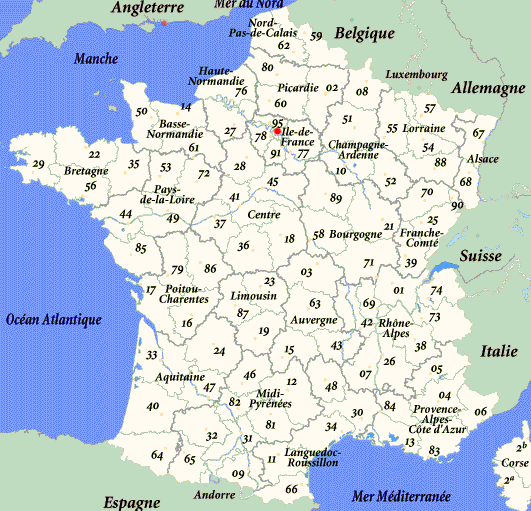
The departments of France and maps

Halloween in France

592ec39b7f46885c43e42ca2926a95cd
French people don't typically celebrate Halloween. In the 1990s, young international hipsters started to have costume parties for Halloween, and some bars and restaurants took up the trend as well (French people typically love costume parties, they are very popular for New Year's Eve or birthdays, even among grown-ups).
So Halloween is not a typical French holiday but stores try to take advantage of it, and it’s not unusual to find a “carve your Halloween pumpkin (“une citrouille” or “un potiron”) display at your local grocery store. Well, pumpkins don’t sell like hotcakes in France, so I guess everything is good to try to sell them… But I don’t know that French people are massively carving pumpkins or doing anything special for Halloween…
photo (26)

A great way to motivate young kids to learn English

With English being studied in elementary school, kids usually know about Halloween. There are many fun activities that can be done on the Halloween theme, and candies are sufficient motivation for any kid in the world! Unfortunately, Halloween is usually during mid-season school break (“les vacances de la Toussaint”), so schools don’t usually organize a trick-or-treating outing. Although some neighborhoods are more responsive than others, trick-or-treating is not yet part of the French tradition, and people have mixed reactions to being “disturbed’ at nightfall for candies by kids in costumes.

How do you say “trick or treat” in French?

Well… you don’t! The whole point being to have French kids use a few English words… But a good translation would be: “des bonbons ou un sort” (candies or a spell), or “bêtises ou friandises” (mischiefs or sweets). Note however the “trick” part is out of the question in France… That part of the tradition didn’t make it (yet ?) and French folks have not had the pleasure to receive eggs or toilets paper over their fences, trees, house… Most people won’t have candies handy, and houses don’t decorate…

IMG_1798

Halloween is getting mix reactions from French folks

In the small village where my parents live, the school teacher is serious about teaching English, and loves the opportunity Halloween provides to motivate kids. All the kids meet up at the school and then go trick-or treating, and guess what? My parent’s house is right in front of the school. It’s the one house all the kids are sure to hit!!! My Mom (75 years old) hates it. My Dad (80 years young) loves it :-)
0

The same ideas as the Catholic holiday “La Toussaint”

It’s too bad though, because on November 1st is the Catholic Holiday of “la Toussaint” (All Saints Day – A national holiday), when French people traditionally visit cemeteries, freshen up the tomb displays, bring colorful mums (“des chrysanthèmes“… symbol of death, never to be given as a bouquet… that would be a big faux-pas) and pray to their dead and their favorite saints. These are the same ideas that are at the very heart of Halloween. I feel Halloween could be a great way to get younger people to carry on ancient French traditions that are getting forgotten, while also integrating a fun American celebration.
IMG_2086.JPG

Funny language of france and translate

“Ah, la vache!” translates to “Oh, my cow!”, “Si mon tonton tond ton tonton, ton tonton sera tondu.” translates to “If my uncle shaves your uncle, your uncle will be shaved”…Hilarious? We’ve got more

One of the most endearing aspects of the French language is its softness and musical sound. It keeps away from the guttural harshness of German, or the sing-song of Italian, and it sure doesn’t expect you to roll your ‘r’s like the Spaniards. To non-native French speakers it sounds poetic, soulful and romantic, but in reality the conversation could be laden with expletives. You may have met the stereotypical French waiter muttering words like idiot, imbecile or cretin, or you associate French humor with Inspector Clouseau and his antics.  In French, tête is head, nez is nose, oreilles is ears and doigts des pied is feet fingers (read: toes)! If you thought that was funny, think again!

Without further ado, we present to you some of our favorite French phrases and idioms that will have you cracking up

1. “Avoir le cafard”

The French have a funny way of showing sympathy. The phrase literally translates to – have the cockroach. And all we wanted to imply was to- be down in the dumps or have the blues!

2. “Casser les oreilles”

Breaking the ears is what it literally means. We use this commonly with reference to loud or harsh noise, bad singers or a nagging people. To make the picture clearer we mean highly irritating.

3. “C’est la fin des haricots”

When translated this simply means, the end of the beans. Yes, you guessed correctly. We do want to say the last straw in English or that’s the end of it. Don’t judge us, we take our love for beans very seriously!

4. “Donner sa langue au chat”

This means to give your tongue to the cat although we mean to give up guessing an answer. Honestly, don’t give your tongue to the cat to understand the logic behind this one. ;)

5. “Boire comme un trou”

This phrase means to drink like a hole and is supposed to mean to drink a lot, like a bottomless well. We, the French probably were drinking like a hole when we came up with the phrase.

6. “Devenir chêvre”

On a serious note, this stands for to become a goat. However, in plain English we mean to be driven mad and this phrase is said to have derived inspiration from goats and their short fuse.

7. “Les carottes sont cuites”

It literally means the carrots are cooked, but we say run simply because the speaker means that the outcome of the situation cannot be changed!

8. “Arrête ton char!”

You could feel really royal if you took this one for its literal meaning which is to stop your chariots. However, you are basically being told to stop bluffing. Nothing royal about that one. ;)

9. “Poser un lapin”

Someone was probably looking at a rabbit hole to escape when this phrase was thought of. Literal translation gives you to leave a rabbit, while actually meaning to stand someone up.

10. “Zut alors!”

Surprisingly, this phrase has no literal translation. Why then did we bring this up? Because the phrase means holy smokes or darn! What better way to conclude the list than with a darn!
Every language has its own weirdness and funny little nuances that give it a unique charm. French, is no different. These phrases and other idioms and slangs can not only give you a good laugh, but will help you hone your French as well.


Best 10 Player Football of france

Here, to continue our countdown to the World Cup, Sports Mole looks at the top 10 players in the history of French football.

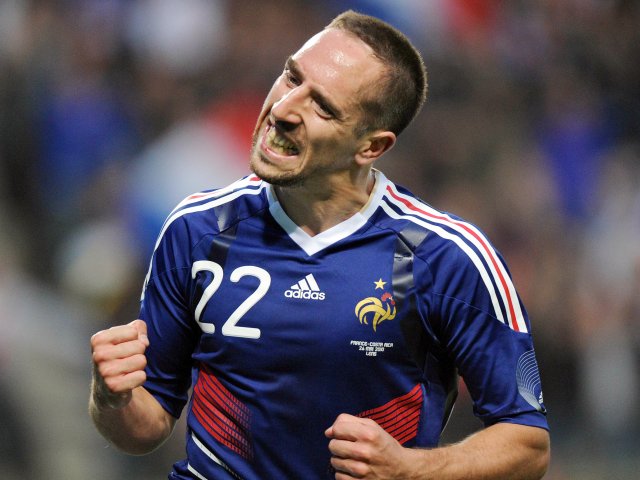
10. Franck Ribery (2006-present, 80 caps, 16 goals)
Bayern Munich winger Franck Ribery celebrates scoring for France on May 26, 2010.
Some have suggested that Ribery is overrated, but last year's Ballon d'Or nominee has, at club level at least, won virtually every honour on offer.
After helping Galatasaray to win the Turkish Cup in 2005, he has become a key figure of the highly impressive Bayern Munich squad. With the German club, he has won four Bundesliga titles, three DFB-Pokals, one Champions League and a World Club Cup.
Where international football is concerned the 31-year-old splits opinion among the French faithful, but he has still turned in some eye-catching performances. His first goal was a particularly memorable one as he scored it in the first knockout round of the 2006 World Cup against Spain.

9. Lilian Thuram (1994-2008, 142 caps, two goals)
France defender Lilian Thuram lifts the European Championships trophy on July 02, 2000.
The defender has won trophies in France, Italy and Spain, as well as being a key member of France's golden period. In short, he is highly thought of in his homeland.
Where club football is concerned, the majority of his success came with Juventus, whom he helped to win two Serie A titles and the Italian Super Cup twice.
The now 42-year-old was not known for scoring goals, although the two that he scored for France were crucial ones. With the hosts losing 1-0 in the semi-finals of France '98, Thuram fired in an unexpected brace to send his nation into the final, where they would overcome Brazil. It was a performance that saw him voted into the Team of the Tournament, just as he was two years later when France won the European Championships.

8. Eric Cantona (1987-1995, 45 caps, 20 goals)
Former Manchester United striker Eric Cantona in action for France on June 05, 1992.
It will come as little surprise to learn that the fiery Cantona's international career was littered with controversy. He fell out with managers - namely Henri Michel and Aime Jacquet - the latter of which cost him the chance of turning out at a major tournament in Euro '96. Nevertheless, he still scored an impressive 20 goals for his country, including both in a 2-1 World Cup qualifying win over Sweden.
After being hounded out of Ligue 1 following a string of incidents, he headed across The Channel, helping Leeds United to win the title in 1992. He then joined Manchester United, where he would become an Old Trafford legend as he spearheaded the club to four Premier League titles and two FA Cups.
His stint with the Red Devils wasn't without strife, but it's fair to say that he is more highly regarded in England than he is in France.

7. Patrick Vieira (1997-2009, 107 caps, six goals)
Former Arsenal midfielder Patrick Vieira celebrates scoring for France on June 13, 2004.
Part of France's golden era, in his prime, former Arsenal stalwart Vieira was regarded to be one of the world's best midfielders.
He may not have been a regular starter during France '98, although he did come on as substitute during the final, but he was a key fixture of the side that won the European Championships two years later.
In England, there was not much known of Vieira when he made the switch from AC Milan in 1996, but he soon became a vital cog in Arsene Wenger's machine. He won three Premier League titles and four FA Cups, as well as a further four Serie A titles back in Italy with Inter Milan. 

6. Jean-Pierre Papin (1986-1995, 54 caps, 30 goals)
Jean-Pierre Papin representing France on June 28, 1986.
Such was the impression that Papin had made during his six-year spell with Marseille, AC Milan were convinced to part with a world-record fee of £10m to secure his services in 1992 - a huge sum for the time.
The striker failed to establish himself fully at the San Siro, but he'd already proven his quality at both club and international level.
Sadly for a player of his talent, he was member of the French side that has since been branded 'the cursed generation'. With Michel Platini retired and the likes Zinedine Zidane still some way off establishing himself, France often struggled to have an impact or qualify for major tournaments during Papin's prime years.

5. Just Fontaine (1953-1960, 21 caps, 30 goals)
France's Just Fontaine is lifted off the pitch by his teammates on June 28, 1958.
A much-fancied France may have only finished third at the 1958 World Cup, but Fontaine made a lasting impression on the tournament. He scored 13 goals - a World Cup record that still stands - which included a quartet of strikes during the playoff encounter against West Germany.
His debut for France was also a memorable one as he scored three times against Luxembourg in a 1954 World Cup qualifier.
The 80-year-old's most successful period at club level was spent with Stade de Reims, whom he helped to win the Ligue 1 title on three occasions. He was also the leading goalscorer during the 1958-59 European Cup with 10 goals, although Reims lost to Real Madrid in the final.

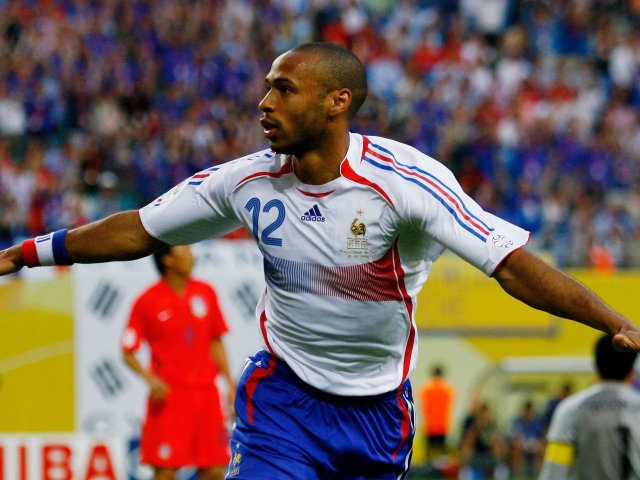
4. Thierry Henry (1997-2010, 123 caps, 51 goals)
Former Arsenal striker Thierry Henry celebrates scoring for France against South Korea on June 18, 2006.
With clinical players such as Papin, Platini and Fontaine for company, it's some achievement that Henry is France's leading goalscorer of all time by a 10-goal margin.
Many will remember the handball incident that robbed the Republic of Ireland of a chance of reaching the 2010 World Cup, but there was much more to Henry's international career than that. He scored three goals during France '98 and added another three at Euro 2000. It was also his goal that defeated defending champions Brazil at the quarter-final stage in 2006.
As far as Arsenal fans are concerned, many will feel that he is their best ever player. The current New York Red Bulls frontman is the North Londoners' record goalscorer, having found the net on 228 occasions - helped by the fact that for five successive seasons he scored 30-plus goals.

3. Raymond Kopa (1952-1962, 45 caps, 18 goals)
Raymond Kopa representing France on October 09, 1955.
To win the Player of the Tournament award at the 1958 World Cup, Kopa had to beat off competition from the likes of PeleGarrincha and his free-scoring teammate Fontaine. Later that year, he also won the coveted Ballon d'Or.
His performances for France at the highest level would have come as little surprise to Real Madrid supporters, who witnessed the Frenchman lift the European Cup on three occasions in the 1950s alongside Ferenc Puskas and Alfredo Di Stefano.
In 2004, the 82-year-old was named by Pele on his list of the top 125 greatest living footballers of all time.

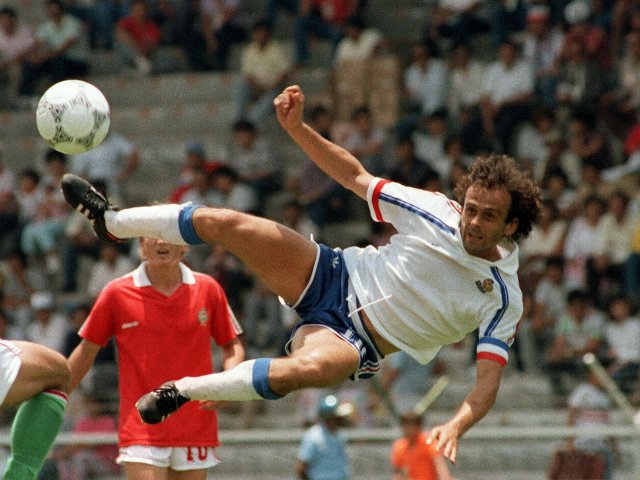
2. Michel Platini (1976-1987, 72 caps, 41 goals)
France's Michel Platini attempts an acrobatic effort on June 09, 1986.
You can say what you want about Platini in his role as head of UEFA, but as a player, there have been few better to have laced up a pair of boots than the 58-year-old.
The midfielder's finest performances for France came during the 1984 European Championships as he guided the hosts to their first major international trophy. Les Bleus scored 14 goals during that tournament, nine of which came from Platini.
He also had success with his three clubs - Nancy, Saint-Etienne and Juventus. It was his goal that helped Juve to win their first ever European Cup against Liverpool in 1985, although the victory was marred by the tragic events inside the Heysel Stadium that saw 39 supporters lose their lives.

1. Zinedine Zidane (1994-2006, 108 caps, 31 goals)
Zinedine Zidance scores a penalty for France against England on June 13, 2014.
No player will have experienced such contrasting emotions in two World Cup finals as Zizou. In 1998 he was the hero, scoring two of the three goals that sunk Brazil. He then scored in the showpiece event eight years later against Italy, but was sent off for headbutting Marco Materazzi as the French were defeated on penalties. It was Zidane's last match as a professional footballer.

Destination in France

10 Top Tourist Attractions in France

Famous for its wines and cheeses, France is the world’s most popular tourist destination receiving 82 million foreign tourists annual. Visitors are attracted by historic cities, a beautiful countryside, the castles of the Loire Valley, and Brittany and Normandy. In addition, France offers an agreeable climate, some excellent beaches on the French Riviera, the Atlantic coast and the island of Corsica, wide possibilities for winter sports , most notably in the Alps and the Pyrenees, and a rich culture with food and wines that are among the most celebrated in the world.
The top tourist attractions in France:
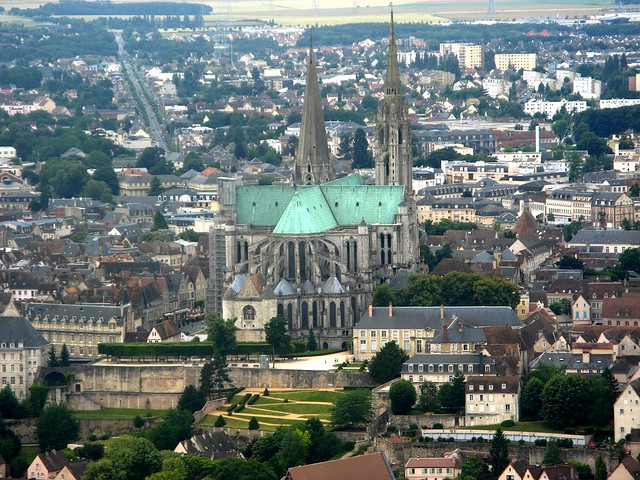
10Chartres Cathedral
The almost perfectly preserved Chartres Cathedral in the city of Chartres is one of the finest examples of the French High Gothic style. The majority of the original stained glass windows survive intact, while the architecture has seen only minor changes since the early 13th century.

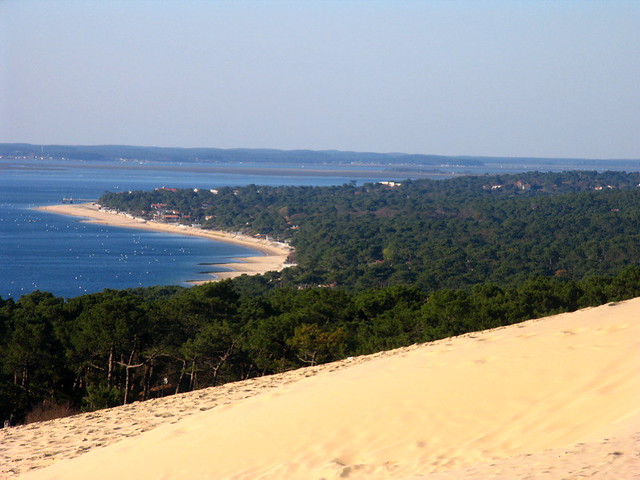
9Dune of Pyla
Dune of Pylaflickr/epeigne37
Located in the Arcachon Bay area, the Dune of Pyla is the tallest sand dune in Europe. At the summit of the dune the view is spectacular with the Atlantic coast and the inlet of the bay on one side and a large pine forest on another.
8Palais des Papes
Palais des Papes wikipedia/Jean-Marc Rosier
One of the largest and most important Gothic buildings in the world, the Palais des Papes (Pope’s Palace) was built when Pope Clement V abandoned Rome in 1309 and settled in Avignon. The 3 meter (10 feet) thick walls, portcullises and watchtowers emphasize the castle-like look of the palace.

7Chateau de Chambord
Chateau de Chambordflickr/juanma36
This second most visited château in France (after Versailles), is a masterpiece of the French Renaissance. Construction of the Chateau de Chambord started in 1519 by King François I so he could hunt in the nearby forests. The cold and massive 440 rooms of the Château made it unpopular as an actual residence and François I himself stayed here for less than 40 days in total.
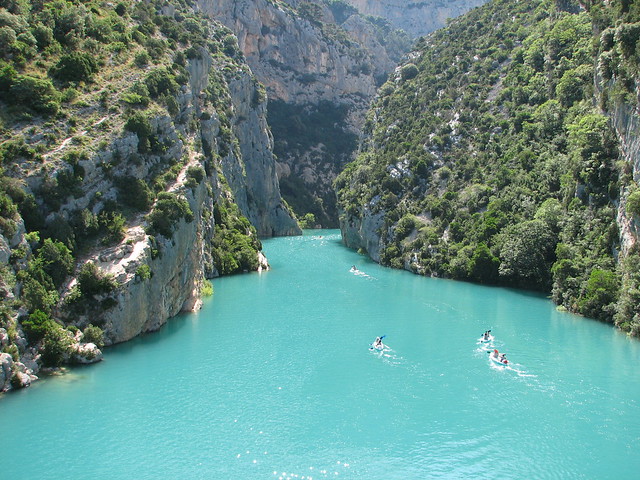
6Gorge du Verdon
The Gorge du Verdon is a 25 kilometer (15 miles) long canyon and rises a spectacular 700 meters (2,300 feet) from the Verdon river below. The river, which is named after its startling green emerald color, is one of the Gorge du Verdon’s most beautiful features. Water sport opportunities here include rafting, kayaking, sailing and water skiing.
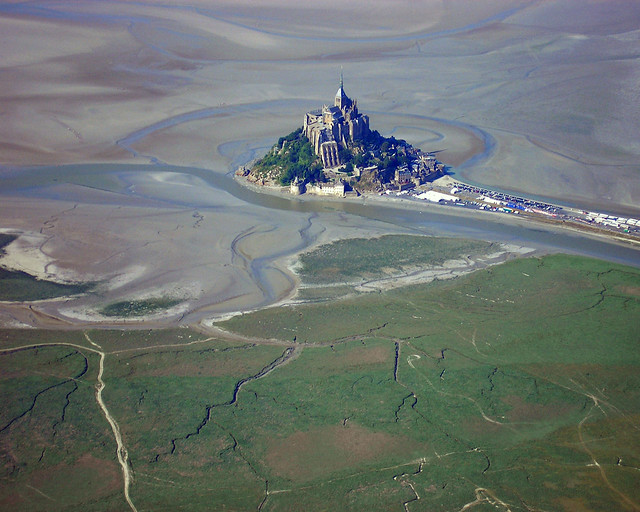
5Mont Saint-Michel
Mont Saint-Michelflickr/El Guanche
Mont Saint Michel is a small tidal island located just off the coast of Normandy. A spectacular and well-preserved Norman Benedictine Abbey of St Michel stands at the peak of the rocky island, surrounded by the winding streets and convoluted architecture of the medieval town.
4Palace of Versailles
Palace of Versaillesflickr/Moyan Brenn
Built in 1624 by Louis XIII, the Palace of Versailles remained the official residence of the Kings of France until October 1789 when the royal family was forced to return to Paris during the French Revolution.
3Chamonix
Chamonixflickr/Zanthia
Chamonix is a famous ski resort in the French Alps at the foot of Mont Blanc. It was the site of the first Winter Olympic games in 1924. In winter world-class skiers and boarders push themselves to extremes on Europe’s most challenging slopes while in the summer months Chamonix is a mecca for alpine mountaineers and mountain bikers.
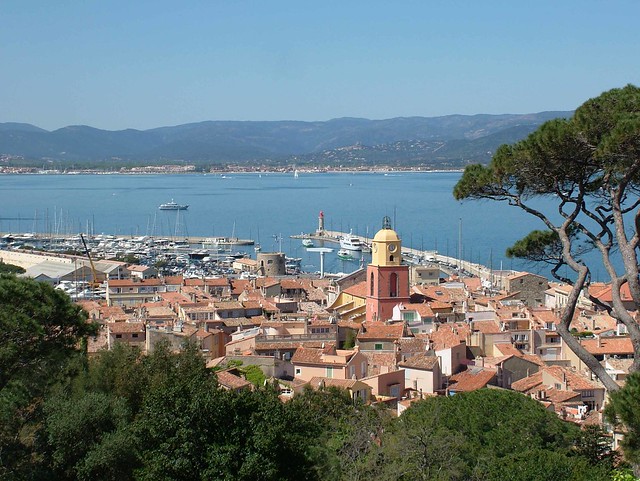
2St Tropez
St Tropezflickr/BR0WSER
Located on the French Riviera, St Tropez is known for its famous and extremely wealthy summer guests. It has been dubbed the playground of the jetset, fashion models, and millionaires. Outside peak summer there are less celebrities to spot but you’ll also instantly appreciate what lured artists, writers and film makers to this picturesque village.
1Eiffel Tower
#1 of Tourist Attractions In Francewikipedia/NonOmnisMoriar
The Eiffel Tower is a symbol of Paris and one of the top tourist attractions in France. The tower was built by Gustave Eiffel as the entrance arch for the International Exhibition of Paris of 1889. Since its construction more than 200,000,000 people have visited the Eiffel Tower making it the most visited paid tourist attraction in the world.

French people

The French (FrenchFrançais) are a nation and ethnic group who are identified with the country of France. This connection may be legal, historical, and/or cultural. Descending from peoples of Celtic origin, later mixing with Romance and Germanicorigin, and having experienced a high rate of inward migration since the middle of the 19th century, modern French society can be considered a melting pot.France was still a patchwork of local customs and regional differences in the late 19th century, and besides the common speaking of the French language, the definition of some unified French culture is a complex issue. The French have equated their nationality with citizenship, regardless of ethnicity or country of residence. Thus, to be French is to be a citizen of France, regardless of one's origin, race, or religion, making France a generic territory where people are bound by the French language.


Successive waves of immigrants during the 19th and 20th centuries were rapidly assimilated into French culture. Seeing itself as an inclusive nation with universal values, France has always valued and strongly advocated assimilation. However, the success of such assimilation has recently been called into question, for example, with the 2005 French riots in some troubled and impoverished suburbs (les quartiers sensibles). Most French people speak the French language as their mother tongue, but certain languages like NormanOccitanCorsicanEuskaraFrench Flemish and Breton remain spoken in certain regions (see Language policy in France).
In addition to mainland France, French people and people of French descent can be found internationally, in overseas departments and territories of France such as the French West Indies (French Caribbean), and in foreign countries with significant French-speaking population groups or not, such as the United Kingdom (French Britons), the United States (French Americans), Canada (French Canadians), Argentina (French Argentines), Brazil (French Brazilians) or Uruguay (French Uruguayans), and some of them have a French cultural identity.